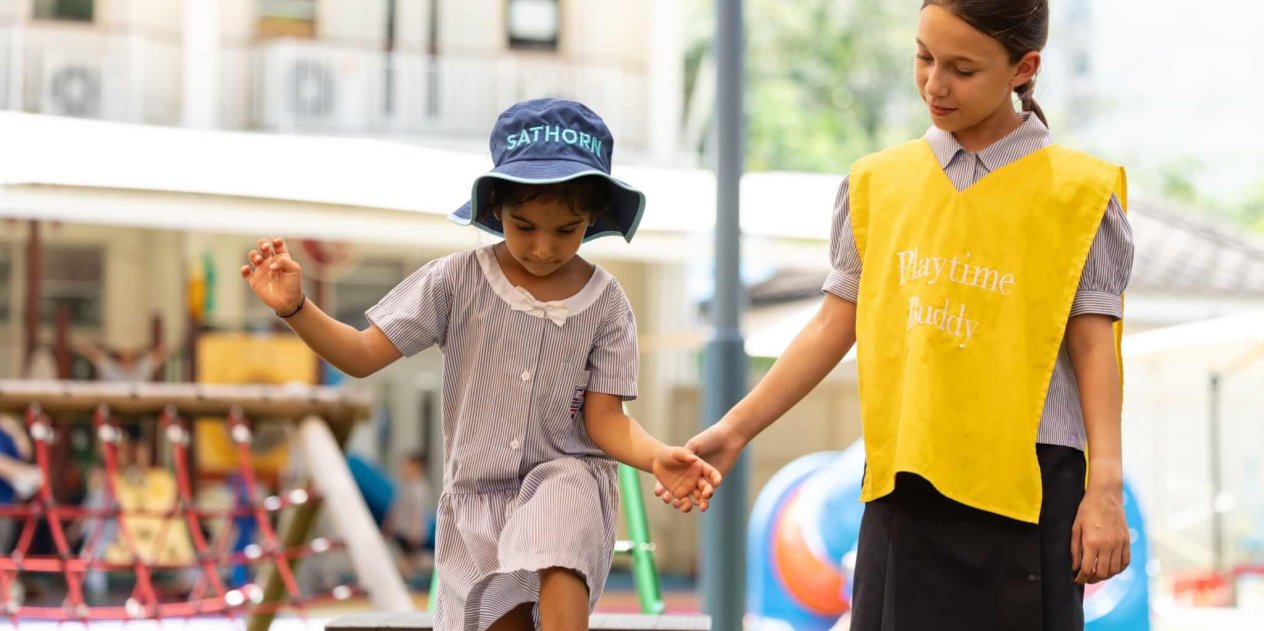
When parents think about outdoor education, they may picture open countryside and wide school fields. For families in central Bangkok, everyday life looks rather different. The city is vibrant and exciting to grow up in, while wide open green space can be harder to find. For an urban school, the more useful question is not whether the campus looks like the countryside, but how outdoor learning becomes part of children’s everyday experience.
St. Andrews International School Sathorn is a small, community-focused British international school for children aged 2 to 11, situated in Bangkok’s central business district. The school follows the English National Curriculum and places genuine emphasis on play-based, child-centred learning in the early years, alongside a balanced primary programme that supports academic progress, confidence and wellbeing. Within this approach, outdoor learning helps children connect movement, curiosity and real-world experience with their classroom work.
Why Outdoor Learning Matters

The case for outdoor learning is not really about grand adventures or specialist programmes. It starts with something much more everyday: children benefit from regular opportunities to move, observe and explore beyond the classroom walls.
Physically, outdoor environments give children space to run, jump, balance and climb in ways that indoor settings rarely allow. This active movement builds core strength, coordination and physical confidence, while also supporting the development of finer motor skills. Regular outdoor activity can also help children manage their energy and return to classroom work feeling more settled.
Being outside also supports sensory development in ways indoor learning cannot fully replicate. Feeling different textures, noticing how light and shadow shift, and listening to the sounds around them: these small experiences build language, develop concentration and deepen children’s understanding of the world. A child who spends time genuinely noticing something — the line of ants or the way the sky looks before rain — is practising early science skills without necessarily thinking of it that way. Outdoor play is naturally social, too. Shared games, improvised rules and spontaneous cooperation give children real opportunities to practise communication, negotiation and teamwork.
None of this requires a forest or a large field. It begins with thoughtful use of the spaces available.
Outdoor Education in a City Campus Setting
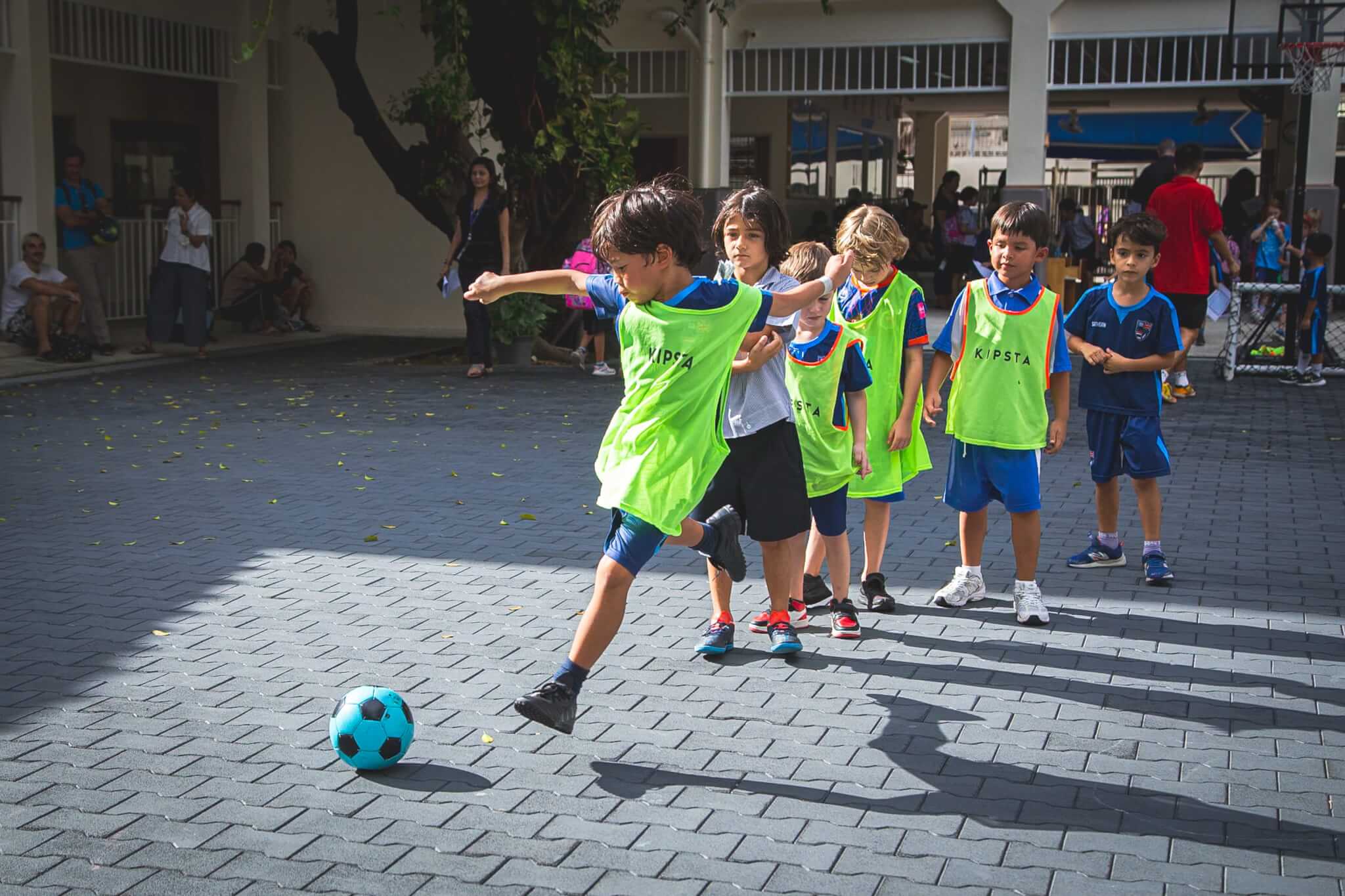
City schools work with different constraints from rural campuses. Space is limited, and in Bangkok there are additional considerations around temperature, humidity and air quality, particularly for young children. These are all part of the planning that goes into outdoor activities.
What makes the difference is not the size of the outdoor area, but how it is used. A compact courtyard or shaded play terrace, treated as a genuine extension of the classroom rather than simply a break-time zone, can offer children rich, meaningful experiences. When teachers use outdoor spaces with purpose, connecting what children see, touch and discover outside with what they are learning indoors, the benefits can follow naturally.
At St. Andrews Sathorn, outdoor learning fits naturally within the school’s early years approach, particularly when outdoor spaces become part of play-based, child-centred learning. Regular, purposeful opportunities to use outdoor spaces can become part of everyday life, rather than an occasional treat. For young children especially, moving between different environments during the day and using outdoor spaces for exploration — not simply exercise — can make a real difference to how settled and engaged they feel.
Bringing Nature into Everyday Learning
One of the reassuring things for parents is that meaningful outdoor learning does not always require a large space or a long session.
When young children sort and count natural objects such as leaves, stones and seed pods, they are exploring early maths in a hands-on, concrete way. Children who sketch a plant or building from observation are practising careful looking, a skill that supports both science and art. Talking about whether today is cloudier or warmer than yesterday introduces cause, effect and change over time in language that makes sense to a five-year-old. Simple questions, such as “What do you notice?” or “What do you think has changed?”, invite children to observe, compare and share ideas, building the foundations of scientific thinking.
Because St. Andrews Sathorn follows the English National Curriculum, outdoor moments can connect naturally with literacy, numeracy, science and art when teachers plan them with purpose. A child who finds words outside to describe a texture or sound has material to bring into a writing lesson. A child who works with a friend to build or sort something has practised cooperation in a genuine context, rather than a contrived one.
Supporting Wellbeing Through Outdoor Time
For many children, outdoor time is not primarily about curriculum outcomes. It is about feeling like themselves. Physical activity — running, climbing and balancing — gives children a natural outlet for energy and emotion. Children who have time to move freely during the day are often noticeably calmer and more focused when they return to structured work. This is not a new idea, but it can easily get lost in a busy city school timetable.
Outdoor spaces also offer manageable challenges. Trying a new piece of equipment, joining a group game or finding a way across an obstacle: small moments like these help children build resilience and a quiet confidence that something new is worth attempting. Over time, that sense of capability can influence how children see themselves as learners. St. Andrews Sathorn is committed to helping children become confident, happy and genuinely engaged with learning. Outdoor time, planned thoughtfully and used well, is an important part of that experience.
Outdoor Learning Across Early Years and Primary
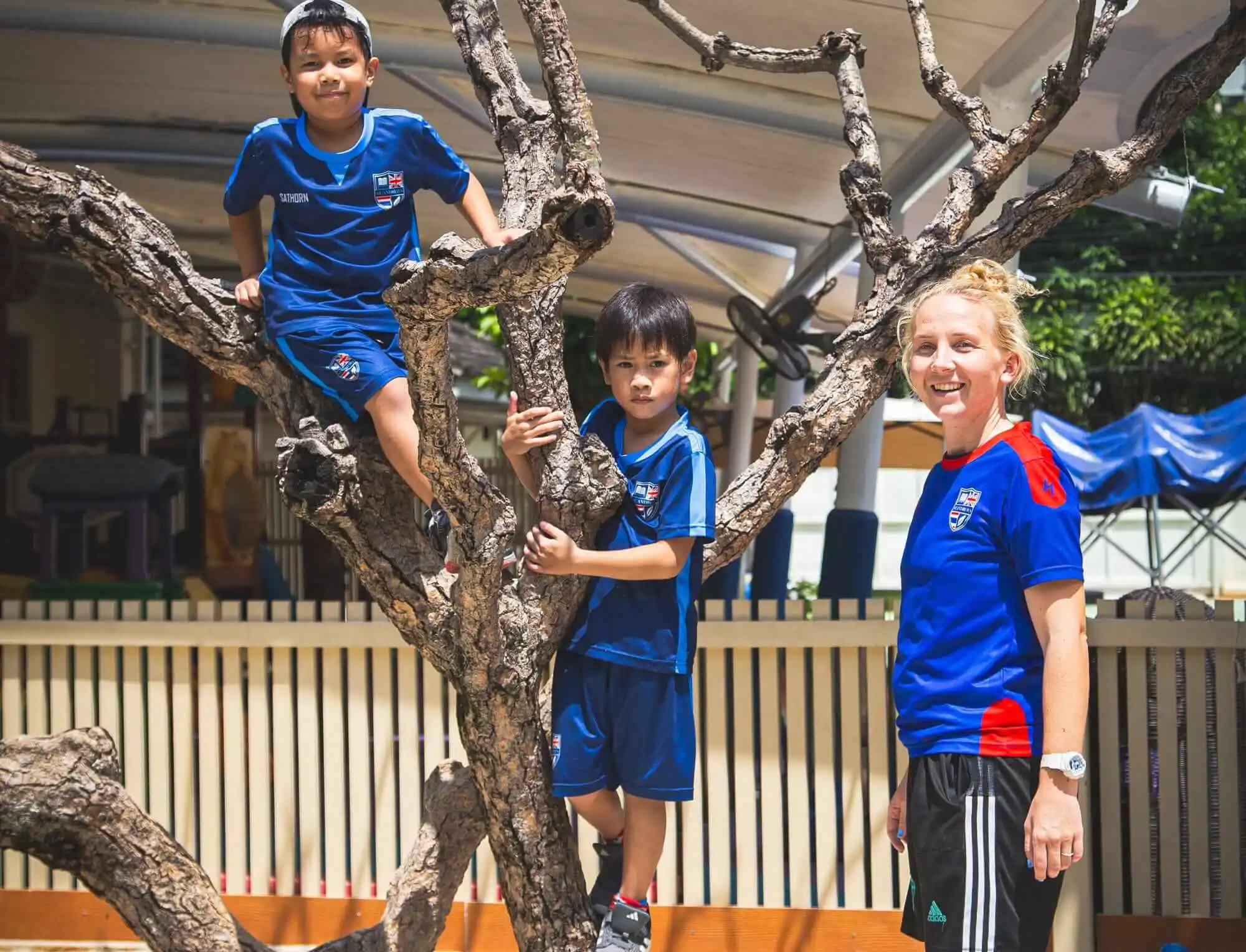
What outdoor learning looks like changes as children grow, while the connection between real-world experience and classroom learning remains constant.
In the early years, the emphasis is on play, movement and sensory exploration. Outdoor time at this stage is most valuable when it feels open and exploratory, giving children room to notice things, try things and talk about what they have found, with adults nearby to extend their language and thinking. As children move into Key Stage 1 and 2, outdoor learning can become more structured while remaining engaging. Primary children might record how a plant changes over several weeks, map outdoor spaces for geography, use natural scenes as starting points for descriptive writing, or explore themes from PSHE through team challenges and cooperative activities. Across both stages, outdoor time works best when it feels like a normal, valued part of the school day.
What to Look For
When visiting an international school in Bangkok, it can be helpful to look beyond whether there is an outdoor space and ask how that space is used. Look for signs that teachers use outdoor areas with purpose, not only as places for break time, but as spaces where learning can continue. Ask how often children go outside, what kinds of activities happen there and how those experiences connect with classroom themes.
It is also worth asking how the school balances safety with age-appropriate independence. Schools that talk about manageable risk, rather than trying to remove every risk, often have a thoughtful approach to child development. Above all, look for a school where outdoor time is part of a genuine commitment to children’s wellbeing, woven through daily life rather than added on.
A Thoughtful Approach to Outdoor Learning in Bangkok
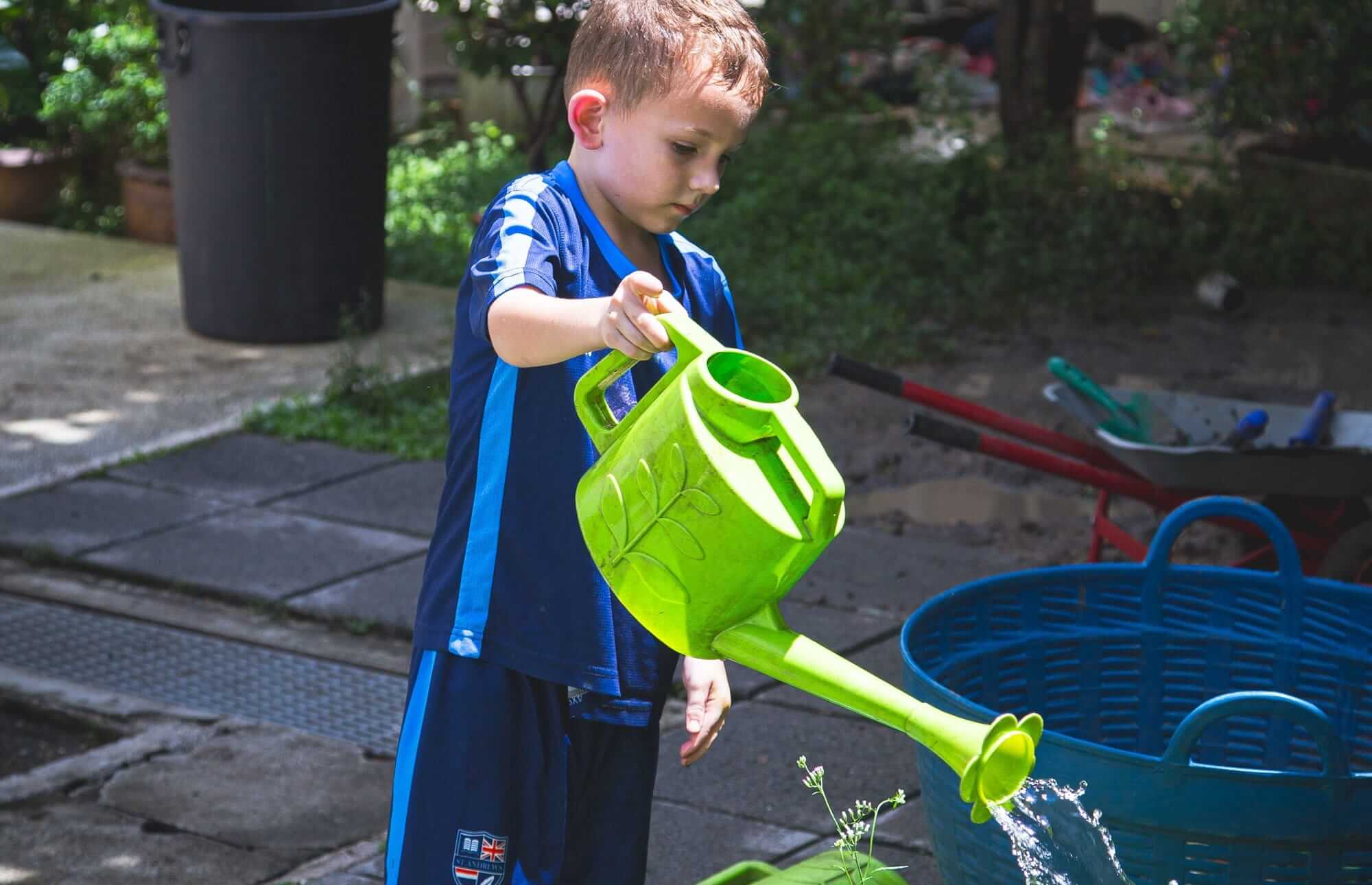
Outdoor education in a city school is not about pretending to be something the campus is not. It is about making the spaces that exist genuinely useful, keeping outdoor learning regular and purposeful, and connecting what children do outside with how they are growing as learners and as people.
St. Andrews International School Sathorn combines a close-knit community with play-based early years learning, a balanced primary curriculum and a genuine commitment to children’s wellbeing. Outdoor learning, used thoughtfully within that community, is one of the ways the school helps children build physical confidence, develop curiosity and find real enjoyment in the process of learning.
To find out more about how St. Andrews Sathorn supports children’s learning, wellbeing and development, parents are welcome to contact the Admissions team or arrange a school visit.