
On a Monday morning in Nursery, a little boy clings to his mother at the classroom door. Tears roll down his cheeks as she turns to leave. A teacher kneels beside him, says quietly, “I know this feels hard,” and gently invites him towards a favourite puzzle. Ten minutes later, he is smiling and working side by side with a new friend.
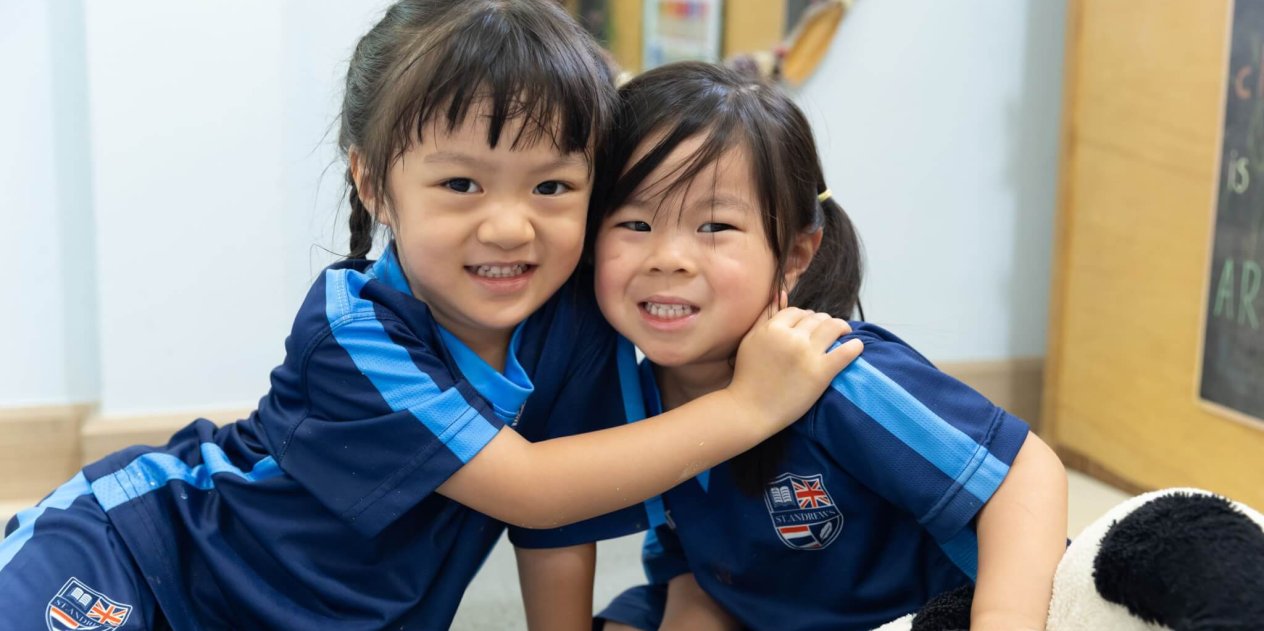
In another corner of the room, two girls are arguing over the same doll. Voices rise. A teacher steps in calmly, helping them find words for what they are each feeling and work out a way to resolve things. Later that afternoon, one of those girls notices a classmate looking sad and goes quietly to offer a hug.
These are not interruptions to the school day. They are the school day. Emotional intelligence in the early years sits alongside early literacy and numeracy as one of the most important foundations children develop during the Early Years. It shapes how children learn, how they build relationships, and how they cope when life gets hard.
Emotional intelligence (EI) is the ability to recognize, understand, manage, and use your own emotions, while also recognizing and responding effectively to the emotions of others.
Psychologist Daniel Goleman described emotional intelligence as having five key components:
- Self-awareness – Recognizing your own emotions and understanding how they affect your thoughts and behavior.
- Self-regulation – Managing emotions in healthy ways, staying calm under pressure, and controlling impulsive reactions.
- Motivation – Being driven to achieve goals with persistence and a positive attitude, even when facing challenges.
- Empathy – Understanding and sharing the feelings and perspectives of others.
- Social skills – Building healthy relationships, communicating effectively, resolving conflicts, and working well with others.
What Emotional Intelligence Actually Means in the Early Years
Emotional intelligence in early childhood is not about raising perfectly patient, unfailingly calm children. It simply means how well a child can understand their own feelings, manage them in broadly safe ways, and begin to notice how other people might be feeling too. Emotional Intelligence has been described by psychologist Daniel Goleman as self awareness, self regulation, motivation, empathy and social skills.
For a three- or four-year-old, that might look like:
- Putting a word to a feeling: “I am sad because Daddy left.”
- Pausing before snatching a toy, even if only just
- Noticing that a friend is crying and choosing to sit beside them
- Rebuilding a knocked-over tower instead of giving up or dissolving into tears
- Saying “I need help” rather than pushing past the frustration alone
None of this happens automatically, and none of it happens in isolation. Young children develop emotional intelligence through warm, consistent relationships with trusted adults, predictable routines, play-rich environments, and a great deal of patient, repeated guidance. A good Early Years classroom provides all of these things, woven into the ordinary rhythm of the day.
Why Emotional Development Matters Alongside Academics
It is natural for parents to focus on early academic skills: recognising letters, counting, pencil grip, early reading. These things matter. But for young children, emotional development in early childhood is not separate from academic learning. It is what makes academic learning possible.
A child who is emotionally overwhelmed cannot concentrate. A child who does not feel safe cannot take in new information. A child who cannot manage frustration will struggle the moment a task gets difficult, or the moment a classmate takes the pencil they wanted. Emotional intelligence does not compete with academic progress. It is the foundation beneath it.
When children have strong early years wellbeing, they are more willing to try new things, more able to listen and focus, more likely to ask for help rather than shut down, and more ready to recover when things go wrong. These are not soft extras. They are essential conditions for learning.
“Emotional intelligence is the foundation upon which confidence, resilience, relationships and lifelong learning are built.”
— Helen Coleman
The Core Emotional Skills Young Children Develop
Self-awareness
Self-awareness begins when a child can name what they are feeling. In Nursery and Kindergarten, a teacher might use a simple feelings chart at morning circle: “How are you feeling today?” Over time, children start to connect how their body feels with a word they can use. “My tummy feels funny. I think I am nervous.” That connection, built across hundreds of small moments, is the first step in managing emotions rather than being swept away by them.
Emotional regulation
Emotional regulation in children does not mean no meltdowns. At three and four years old, big feelings are completely normal. What children are slowly learning, with a great deal of adult support, is how to come back from those big feelings without hurting themselves, others, or their friendships.
A child who used to hit when frustrated now stomps their foot and says “I am angry” instead. A child who once cried for half an hour after drop-off now settles in five minutes. A child learns to take three deep breaths, squeeze a cushion, or sit quietly in a calm corner before trying again. Young children co-regulate first: they borrow the calm of the adult beside them. Only gradually, through many repetitions, do they internalise those strategies as their own.
Empathy and kindness
Empathy in young children grows through stories, role play, and the daily example set by the adults around them. You see it in small, real moments: a child fetching a tissue for a friend who is crying, a child offering their favourite toy to someone left out, a child pausing after knocking over a tower and helping to rebuild it. These gestures are the result of environments where kindness is modelled, named, and genuinely valued.
Confidence and independence
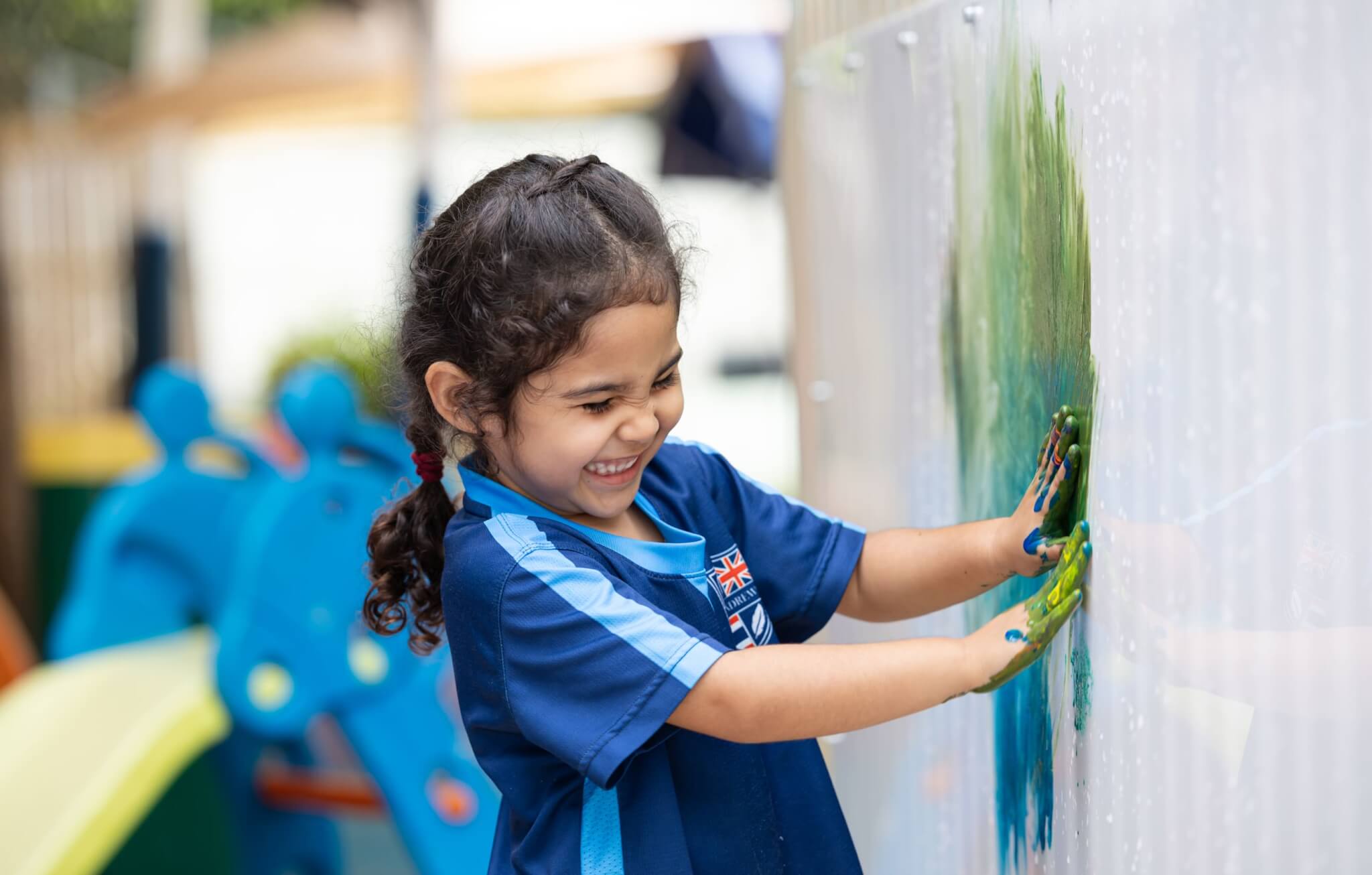
Confidence in early childhood is not the same as being the loudest child in the room. It is the quiet internal sense: “I can have a go at this.” It grows through small, repeated successes: hanging up their own bag, choosing an activity and staying with it, asking a teacher for help instead of standing frozen. Children who feel capable in these small ways are far more willing to take on learning challenges. The willingness to try in PE or at the painting table becomes the willingness to try with phonics or mathematics.
Social problem-solving
Social skills in preschool children develop through practice, not instruction. In a good Early Years classroom, teachers coach children through the small social challenges that arise naturally all day: two children wanting the same red car, a game that has turned unfair, a child who wants to join in but does not know how to ask. You might hear a teacher say: “You both want the car. What could we try?” or “Tell your friend: I do not like it when you push.” These conversations, repeated patiently across weeks and months, build the social skills children will use for the rest of their lives.
Resilience and perseverance
Resilience grows when children experience manageable difficulty with a caring adult nearby. The tower falls and they rebuild it. The drawing goes wrong and they turn it into something new. They do not get to be first, and they join the game anyway. Adults support resilience not by removing frustration but by staying calm through it: acknowledging the feeling, encouraging effort, and celebrating persistence rather than only praising perfect results.
Emotional Intelligence and School Readiness
School readiness is one of those phrases that can quietly make parents anxious. It is worth being clear about what it actually means. School readiness is not primarily about whether a child can recognise their letters, count to twenty, or hold a pencil correctly. It is about whether a child is emotionally and socially ready to thrive in a group setting.
A child who is on the way to being ready for Nursery, Kindergarten or Reception can, broadly:
- Separate from their parent with growing confidence
- Follow a familiar classroom routine
- Ask for help when they need it
- Wait briefly for a turn without becoming overwhelmed
- Manage small frustrations with some support
- Join in with group activities
- Listen for short periods and take part in a simple conversation
- Begin to recover after setbacks or disagreements
When children have these foundations in place, the Early Years classroom becomes a place where they can genuinely learn, rather than a place where they are mostly coping. Their minds are available for new knowledge because they feel safe, understood, and capable of navigating the day around them.
What This Looks Like in Nursery, Kindergarten, and Reception
In Nursery
Nursery is often the first-time children spend extended time away from home. The focus is on feeling safe, forming warm bonds with adults, and beginning to understand very big feelings. Children at this stage play alongside each other more often than they play together; sharing attention, learning to wait, and beginning to notice that other people have feelings too. Teachers spend a great deal of time narrating emotions: “You are sad that Mummy left. She will come back after snack.” That patient, repeated narration is powerful. Over time, children start to reach for those words themselves.
In Kindergarten
By Kindergarten, friendships become genuinely important, and play becomes more complex. This is wonderful, but it also brings more social challenges. Imaginative role play requires negotiation: “You can be the doctor; I will be the patient.” Games have rules that need to be kept. Children begin to notice who is included and who is left out. Teachers at this stage are constantly coaching the real social situations that arise through the day, helping children use words, take turns, solve small problems, and repair friendships when they break.
In Reception
In Reception, you might notice greater independence with routines, more persistence with writing or phonics, and an emerging ability to consider another child’s point of view. Managing disappointment when things do not go as hoped becomes something teachers work on gently and consistently. Circle time discussions, partner activities, and group projects all give children real, repeated practice in listening, cooperating, and expressing themselves clearly.
The Role of Play in Building Emotional Intelligence
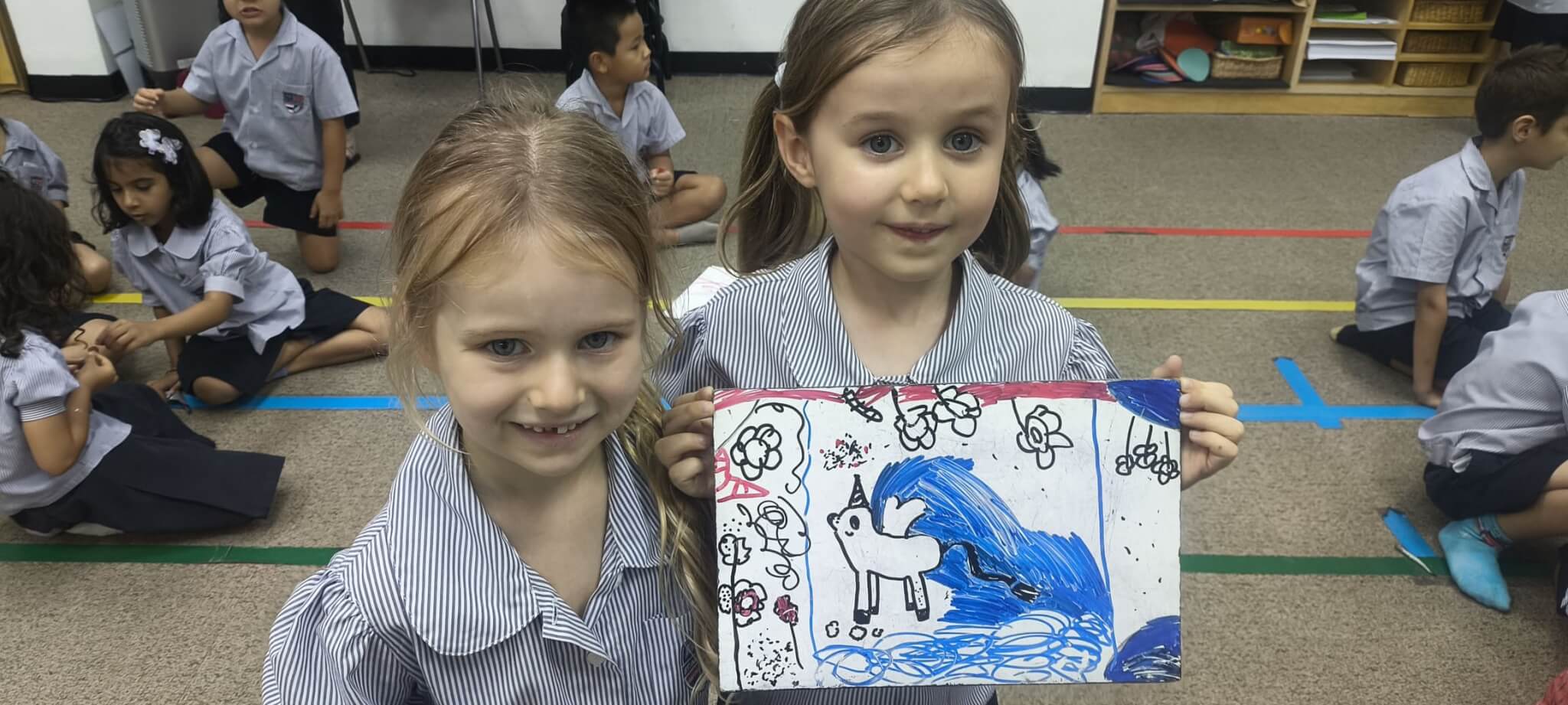
For young children, play is not a break from learning. It is the primary way emotional and social learning happens. When children are absorbed in play, they are practising skills that no worksheet can teach.
Role play allows children to step into different feelings and perspectives. Playing hospitals, shops, families, or superheroes gives children a safe space to explore emotions, practise empathy, and try out different ways of responding to others. The child negotiating who plays what role is practising communication and flexibility in the same breath.
Building together with blocks or construction materials teaches children to share ideas, cope with things going wrong, and keep working as a team even when there is disagreement. Outdoor play offers physical release, helps children manage energy, and gives them chances to take supported risks that build genuine confidence. Storytelling and small-world play help children process experiences and rehearse solutions to social problems in a low-stakes way. Child-led exploration builds independence, persistence, and the belief that their ideas have value.
When you see a group of four-year-olds deep in an imaginary game, sorting out who does what and what happens next, you are watching emotional intelligence develop in real time.
How Skilled Early Years Teachers Support Emotional Growth
In a nurturing Early Years environment, emotional development is not a separate lesson timetabled into the week. It runs through everything that happens, from the moment children arrive in the morning to the stories read at the end of the day.
Skilled Early Years teachers model calm, respectful communication in every interaction, including the difficult ones. When a child is upset, the teacher’s steady, unhurried response teaches something more powerful than any lesson plan: that big feelings are manageable, that adults can be trusted, and that there is always a way through.
Through circle time, stories, and guided play, teachers introduce emotional vocabulary naturally. They help children name what they are seeing in a picture book character, or what might have happened between two children on the playground. They set up clear, predictable routines that give children the security to take social and creative risks, and they observe quietly, noticing which child is struggling to join in or might need a moment of gentle support before they are ready to try again.
Importantly, good Early Years teaching does not mean removing every difficulty. A classroom that is too smooth, too free from frustration, does not give children the chance to practise the skills they genuinely need. The skill lies in offering just enough support so that children can face manageable challenges and feel proud of themselves for getting through them.
How Parents Can Support Emotional Intelligence at Home
You do not need special resources or a background in child development to support your child’s emotional growth. Everyday moments at home are powerful teaching opportunities. The goal is not to get every interaction right. It is simply to be warm and consistent most of the time.
A few realistic, parent-friendly ideas:
- Name feelings as they happen. “You look really disappointed” or “You seem proud of that” helps children build emotional vocabulary without feeling corrected.
- Validate feelings without giving in to every demand. “I know you are sad we have to leave the playground. It is still time to go” holds both the feeling and the boundary, which is exactly what children need.
- Model your own calming strategies. “I am going to take a breath before I decide what to do” shows children what regulation looks like in real life, and normalises the fact that adults manage feelings too.
- Read stories together and pause to talk about characters’ feelings. “How do you think she feels right now?” builds empathy quietly and naturally.
- Offer small, genuine choices. Choices reduce power struggles and build a child’s sense of independence and agency, both of which support emotional confidence.
- Praise effort, kindness, and persistence rather than only outcomes. “You kept trying even when it was hard” is more useful to a child’s development than “You are so clever.”
- Allow manageable frustration. It is tempting to step in the moment things feel difficult, but small struggles followed by success build resilience in a way that rescue cannot.
- Keep routines predictable where possible. Regular mealtimes, bedtimes, and school routines help children feel secure and far less overwhelmed.
- Stay in touch with your child’s teacher. Sharing what you are noticing at home, and hearing how things are going in class, means you can use consistent language and responses in both settings.
Frequently Asked Questions
At what age do children start developing emotional intelligence?
From birth. Babies experience basic emotions and depend entirely on adults to help them regulate. The toddler and preschool years bring a rapid expansion of emotional experience: bigger feelings, more complex social situations, and a growing ability to put words to what is happening inside. There is no point at which emotional intelligence suddenly switches on. It builds gradually throughout childhood, shaped by relationships, experience, and patient guidance.
Can emotional intelligence be taught?
Yes, with an important nuance: it is less about formal instruction and more about sustained nurturing. Children develop emotional skills through the relationships around them, through being heard and guided repeatedly, and through having many opportunities to practise in safe, supportive environments. Adults at home and at school both play a significant role.
What does school readiness really involve?
Far more than letters and numbers. School readiness includes emotional security, the ability to separate from a parent with some confidence, basic independence with daily routines, communication skills, the willingness to try new things, and the capacity to manage small frustrations. Children who have these foundations in place are in a much stronger position to engage with academic learning when it begins.
What if my child finds sharing or managing big feelings particularly hard?
Almost all young children struggle with this at times. Some find it harder than others, and that is entirely normal at this age. Stay calm, be consistent, and keep in close contact with your child’s teacher. Focus on small steps: naming feelings, practising turn-taking at home in low-pressure moments, and praising any improvement you notice, however small. If concerns persist, a conversation with your child’s teacher or a child development professional is always a sensible next step.
Is emotional intelligence more important than academic skills?
Neither is more important than the other. They are closely connected. Emotional intelligence supports academic learning by helping children focus, persist, manage difficulty, and build positive relationships in the classroom. A balanced approach that genuinely values both gives children the strongest possible foundation.
How can parents and teachers work together effectively?
The most powerful support children receive is when home and school are aligned. Share information with your child’s teacher about their interests, worries, and any significant changes at home. Ask what strategies are working well in class. When children experience consistent responses in both settings, they feel safer and tend to progress more steadily.
Helping Your Child Thrive as a Whole Person
Emotional intelligence in the early years is not an optional extra added on top of academic preparation. It is part of how children feel secure enough to learn, curious enough to explore, and resilient enough to keep going when things get hard.
Every drop-off goodbye managed with growing confidence, every toy shared, every moment a child recovers from disappointment or reaches out to comfort a friend: these are not small things. They are the building blocks of emotional strength, social confidence, and genuine readiness for school and for life beyond it.
When families and schools work together to nurture the whole child, they are not choosing between feelings and learning. They are creating the conditions in which both can genuinely flourish.
Explore Early Years at St. Andrews Sathorn
If you are looking for an Early Years environment where your child can grow emotionally, socially, and academically, we would love to welcome your family to St. Andrews Sathorn.
Across Nursery, Kindergarten and Reception, children are supported as whole people: building confidence, independence, friendships and a genuine love of learning from the very beginning. We believe that when children feel known and valued, they are ready to thrive in every area of school life.
To see how this looks in everyday classroom life, we warmly invite you to arrange a school visit. It is the best way to get a real sense of the environment, meet the Early Years team and ask the questions that matter most to your family.