
For many parents, the idea of joining a playgroup can feel both exciting and a little uncertain. You know it could be good for your child. You may have heard other parents talk about it, or noticed how quickly children seem to come out of their shells once they begin socialising regularly. But you might still find yourself wondering whether your child is quite ready.
Maybe they are naturally shy. Maybe they have not spent much time in a group setting yet. Perhaps they clung to you a little more than expected the last time you took them somewhere new, and now you are unsure whether a playgroup is the right next step or simply too soon.
These are very normal thoughts to have, and they deserve an honest answer. The short version is this: a well-designed playgroup is not about pushing children before they are ready. It is about giving them a gentle, supported first step into a wider world, one that moves at their pace and builds confidence through positive experiences rather than pressure.
That is exactly what makes St. Andrews Sathorn’s Friday Playgroup different from simply dropping your child into an unfamiliar room and hoping for the best. It is a thoughtfully designed early years experience, led by experienced educators within an established international school setting. Each session has a purpose and each activity supports development in a meaningful and observable way. Most importantly, children are never rushed.
Before looking at what makes this particular playgroup stand out, it helps to understand why playgroups matter in the first place.
Why Playgroups Matter in Early Childhood
When people talk about the benefits of playgroups, the language can start to feel quite abstract: social development, cognitive growth, communication skills. While all of this is true, most parents want to know something simpler: what will my child actually get out of this? What changes will I see?
The answer, when a playgroup is doing its job well, is that the changes are real and often visible quite quickly.
Learning to Be Around Other Children
For many young children, a playgroup is the first time they are regularly around other children their own age. That is a more significant experience than it might first appear. Being in a shared space with peers helps children begin learning some of the quiet foundations of social life: watching what others do, waiting for a turn, deciding whether to join in, responding to someone else’s reactions.
These skills do not usually develop all at once. They grow through small moments. A child sits beside another during story time. They notice someone else reaching for the same toy and decide to wait. They begin recognising familiar faces from the week before. Over time, those small experiences add up. They help a child learn that being part of a group can feel safe and even enjoyable, rather than overwhelming.
For children who have mostly been at home, this kind of gentle exposure can make a real difference, not just now, but also when they eventually move into Nursery or Early Years.
Sensory Play and How the Brain Actually Learns
Young children do not learn by sitting still and listening. They learn by doing: by touching, pouring, building, sorting, squeezing, listening, and experimenting. Sensory rich play is not simply entertainment. It is one of the most natural and effective ways children begin to make sense of the world around them.
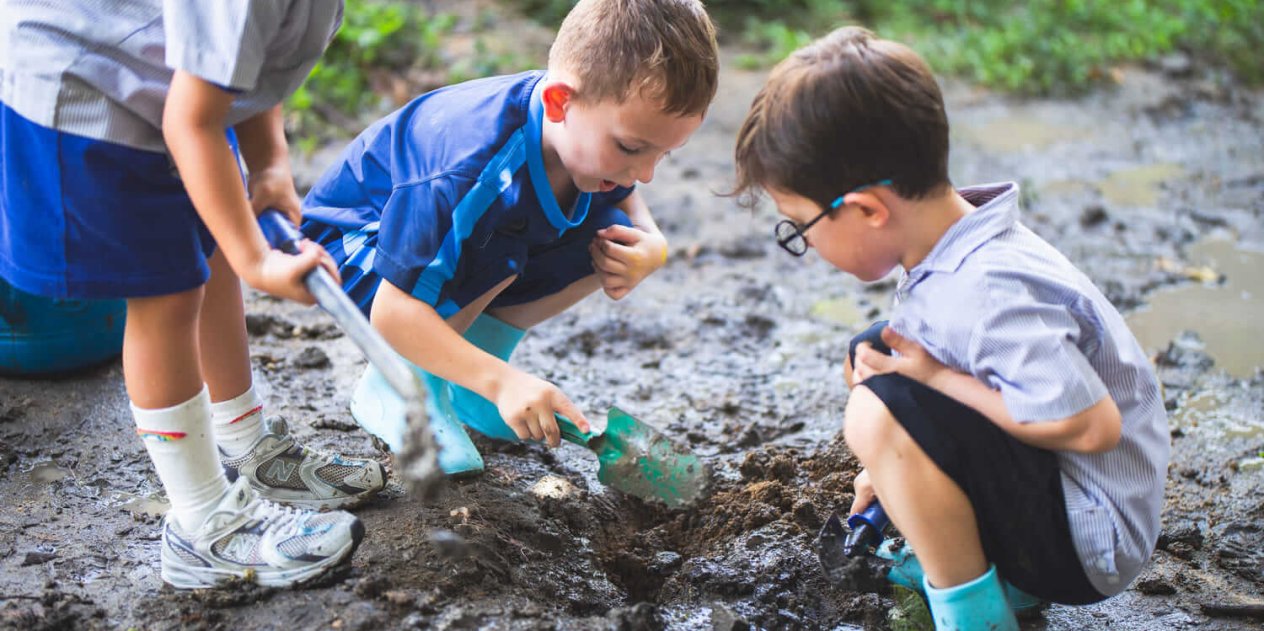
When a child scoops sand, mixes colours, stacks blocks, or explores a new texture, they are doing far more than just playing. They are building attention and concentration. They are discovering cause and effect. They are developing the early problem-solving habits that will serve them well throughout their education. And crucially, all of this learning is active. It is driven by the child’s own curiosity, which makes it both effective and enjoyable.
Parents often notice the effects of this kind of play in very practical ways. A child who has regular access to purposeful sensory activities often becomes more curious, more willing to try new things, and gradually more able to settle into a task for longer periods of time.
Creativity and Imaginative Play
Creativity in early childhood is not really about producing neat artwork to take home. It is about helping children explore ideas, express themselves, and engage with the world in their own way. Through music, movement, stories, mark making, and pretend play, children can experiment without pressure. There is no single right answer. There is no performance being evaluated. There is simply the freedom to explore and experiment.
That freedom matters enormously at this age. Children who have space to be creative tend to approach new situations with more confidence. They are more willing to try things, more comfortable expressing their ideas, and less worried about making mistakes. These qualities continue to support children as they move into more structured learning environments, especially when those foundations are built early.
Imaginative play is especially powerful. When children tell simple stories, act out routines, or invent their own little worlds, they are developing language, emotional awareness, and flexible thinking all at once. They are also learning to engage in a shared experience with others, which quietly builds both creativity and social understanding at the same time.
Physical Development: Building Confidence Through Movement
Parents often notice physical milestones because they are visible. A child grips a pencil more confidently. They climb more steadily. They join in with a movement activity without hesitation. These changes may seem small, but they form part of an important foundation for later independence and learning.
Fine motor skills, which involve those small, precise movements of the hands and fingers, develop through activities like mark making, threading, sorting, sticking, and manipulating hands on materials. These are the same skills children will need for holding a pencil, turning pages, and developing early writing readiness. Gross motor skills, which involve the larger movements of the body, develop through dancing, stretching, jumping, climbing, and active play. Balance, coordination, and spatial awareness all begin here.
A good playgroup does not treat physical development as separate from the rest of learning. It recognises that young children learn and think through their bodies. Movement supports focus, and confidence in physical ability feeds confidence in other areas too. When children feel capable in their movements, they tend to feel more capable overall.
Language That Grows Through Relationships
Language does not develop through instruction alone. It develops through connection, repetition, and genuine interaction. Young children build communication skills when they hear language used naturally around them and when they have real reasons to respond.
In a playgroup setting, language is everywhere. Educators name objects, describe what is happening, ask simple questions, and guide routines through words and gestures. Songs are repeated. Stories are shared. Children begin connecting words with actions and experiences. They start using language socially, whether through speech, pointing, copying, or simply joining in.
For some children, this shows up as a noticeable increase in vocabulary. For others, it might be a new confidence in joining a familiar song or a willingness to communicate with adults and peers in ways they had not before. Children develop language at their own pace, but a strong playgroup creates consistent, high quality opportunities to support that development every single week.
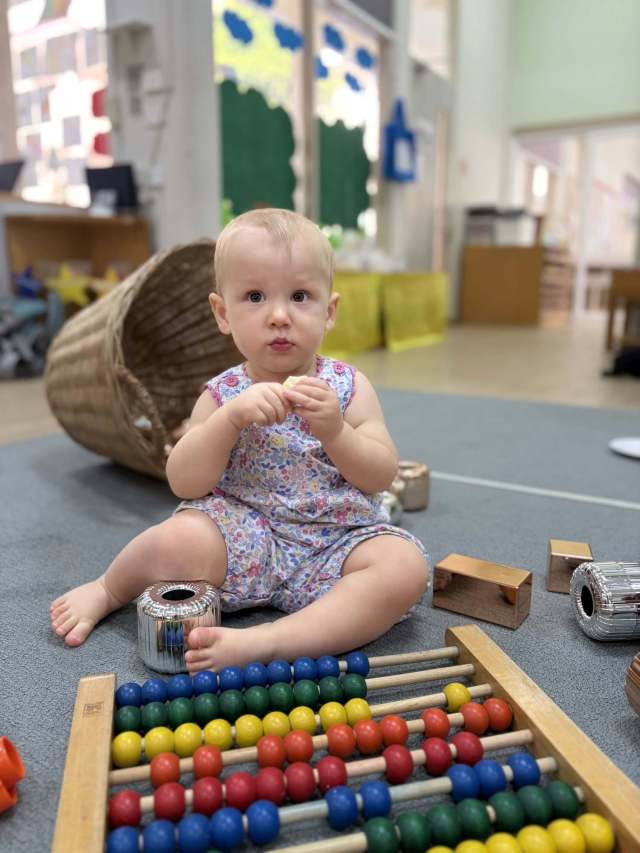
St. Andrews Sathorn’s Friday Playgroup
Understanding why playgroups matter is one thing. Understanding what makes a particular playgroup worth choosing is another. The Friday Playgroup at St. Andrews Sathorn does not simply happen to tick the right boxes. It has been thoughtfully designed with young children’s development at the centre of everything.
Structured, But Never Rigid
One of the most reassuring things for parents is knowing that a session has clear structure and purpose without feeling like a formal class. Young children do not thrive when everything is forced or hurried. But they also benefit from the calm and security that come with thoughtful structure. The best early years environments understand that both freedom and guidance matter.
At the Friday Playgroup, sessions are planned to include meaningful activities while still allowing children to explore at their own pace. Every part of the morning is thoughtfully planned, while still leaving room for flexibility. A child who arrives feeling unsure is never pushed, and a child who is ready to dive straight in is never held back. The environment supports child-led learning, held together by a framework that educators have prepared with care.
This is not random free play. It is purposeful, responsive, and developmentally appropriate early years provision.
Led by Experienced Early Years Professionals
The quality of the adults in the room makes a significant difference in any early years setting. The Friday Playgroup is not simply a general childcare environment. It takes place within an established international school and is led by experienced early years educators who understand how young children develop.
That expertise is visible in practice. Educators notice when a child needs quiet encouragement, when they need space to observe before joining in, when they are ready for a little more challenge, and when simply being present is what matters most. They understand that development is not always linear or uniform, and that the best support is responsive rather than prescriptive.
For parents, this is equally important. When your child attends a session led by professionals who genuinely understand early childhood, you know that what happens in that room has been carefully thought through. The activities are not fillers, and the atmosphere is not accidental. It is all grounded in clear understanding of what children at this age actually need.
“The early years are such an important time in a child’s life, not only in terms of academic readiness, but socially and emotionally as well. Our Friday Playgroup is designed to give children a warm, positive first experience of learning alongside others, at a pace that feels right for them. We also want families to feel genuinely welcomed and supported from the very beginning, because when parents feel at ease, children settle so much more naturally,”
says Miss Helen Coleman, Head of School, St. Andrews Sathorn.
A Community for Families, Not Just Children
A good playgroup supports more than the child. It supports the whole family.
For many parents, especially those who are new to Bangkok, new to international schooling, or simply new to this particular stage of parenthood, early years settings can feel a little unfamiliar at first. A warm, welcoming playgroup offers a way to ease into that world. It gives families a chance to meet other parents, spend time with educators, ask questions in a relaxed setting, and begin to understand what being part of the school community actually feels like.
Parents feel more confident when they can see the environment for themselves, observe how staff interact with children, and simply be part of things before the formal start of school life. And when parents feel settled and positive, children almost always pick up on that. It makes their own experience of the setting feel safer and more enjoyable.
At St. Andrews Sathorn, the Friday Playgroup is part of that wider sense of belonging. Attending is not just about what happens during the session. It is the beginning of a relationship with a school community that many families go on to be part of for years.
A Gentle Introduction to School Life
One of the most practical benefits of the Friday Playgroup is the familiarity it builds before formal schooling begins. For a young child, even straightforward things can feel very new: arriving at a school setting, seeing other children gathered together in a group, joining a routine, moving between activities, listening during story time and trusting adults who are not family members.
None of this is negative, but it can be a great deal to absorb all at once, especially if it happens for the first time on the first official day of Nursery or Early Years.
A playgroup softens that transition considerably. Children get to experience a school environment in a calm, unhurried way. They begin to understand the rhythm of a shared morning. They build trust in the adults around them. They grow more comfortable within the environment. By the time formal school begins, it does not feel entirely new. It feels, at least in part, like somewhere they already know. That familiarity can make an enormous difference to a child’s confidence and a parent’s peace of mind.
What a Typical Friday Session Looks Like
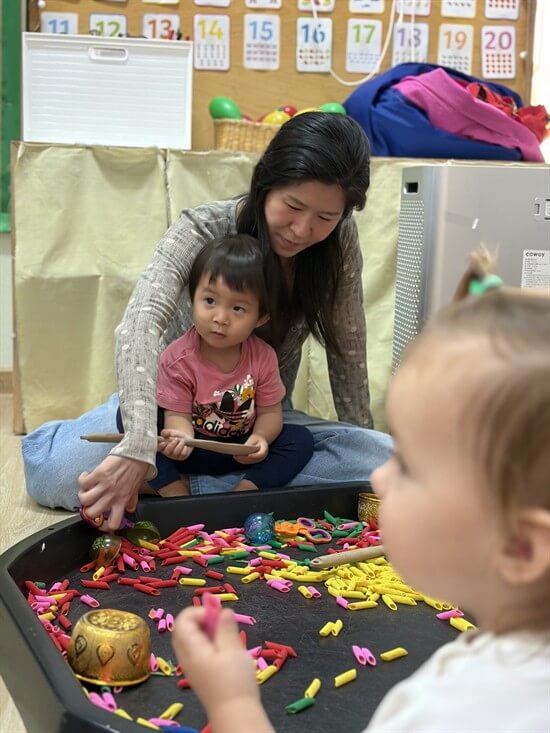 One of the best ways to understand a playgroup is to picture what a session actually feels like from the moment you walk in.
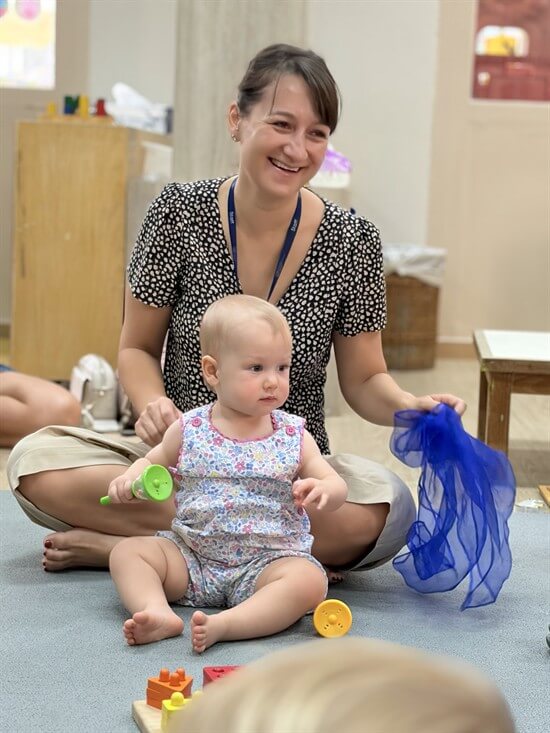
At St. Andrews Sathorn, a typical Friday morning is designed to feel calm and welcoming from the start. Children arrive and are gently encouraged to settle in at whatever pace feels right for them. Some are ready to explore immediately, drawn straight to an activity or a familiar face. Others prefer to stay close to a parent at first, watching what is happening before deciding to join in. Both responses are completely normal, and experienced staff know how to support them without pressure or expectation.
As the session unfolds, children are invited to take part in a range of activities that might include sensory play, music and movement, stories, and simple creative experiences. Each type of activity supports a different area of development, and the overall shape of the morning has been carefully designed to give children a varied and engaging experience.
Sensory play might involve exploring different materials, building concentration, and practising early problem-solving. Music and movement help with listening, rhythm, coordination, and simply the joy of participating in something together. Story time supports language development and the ability to focus attention for short periods of time. Creative activities encourage self-expression and develop fine motor control that will support later learning.
Throughout the session, educators guide, model language, offer encouragement, and help children feel secure without being overly directive. Parents are not treated as passive observers. They are part of the experience, particularly in those early weeks when a child is still finding their feet and needs the reassurance of a familiar face nearby.
The overall feel is important. A good playgroup should not feel noisy in a chaotic way, or hurried, or overly structured for very young children. It should feel settled and purposeful, but also warm and welcoming. Children should have room to breathe, explore, and be themselves, while benefiting from the steady presence of adults who understand what they need and know how to provide it.
Why the First Group Experience Matters More Than You Might Think
Parents sometimes hold back from playgroups because they are waiting for their child to seem more confident first. In reality, the playgroup itself is often a significant part of how that confidence develops.
Children become comfortable in social situations through repeated, positive experiences in environments that feel safe and well-supported. They learn that being with others can feel enjoyable. They discover that unfamiliar routines gradually begin to feel familiar.
That is why the quality of a child’s first group experience matters so much. If it feels rushed, impersonal, or poorly matched to where a child actually is developmentally, it can make later transitions more difficult. If it feels warm, calm, and appropriately paced, it builds the kind of foundation that makes everything that follows a little easier.
St. Andrews Sathorn’s Friday Playgroup is built around that understanding. It respects the pace of early childhood. It takes child-led learning seriously. And it gives children the chance to grow in confidence through experience rather than expectation.
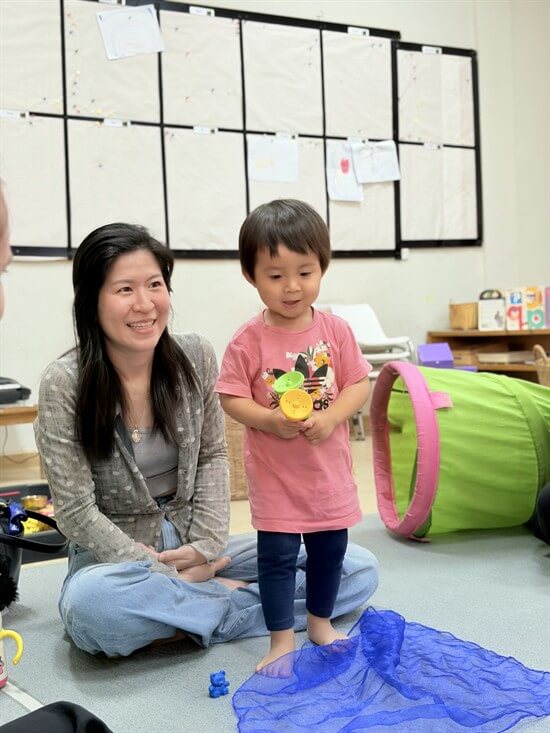
A Thoughtful First Step for Your Child and Your Family
Choosing a playgroup is not simply about finding something for your child to do during the week. It is about choosing an environment that will shape how your child first experiences learning alongside others, and how your family first experiences the world of school.
A playgroup supports the whole child. It helps with confidence, communication, creativity, movement, curiosity, and the quiet social skills that make everything else easier. It also supports families by offering a warm and genuine introduction to school life, and a sense of connection with educators and other parents that can continue well beyond those early Friday mornings.
St. Andrews Sathorn’s Friday Playgroup offers all of this within a setting that takes early childhood seriously. Each session is led with purpose, shaped by experience, and focused on what children at this particular stage actually need. It is not just a morning activity. It is a carefully planned first step into learning, belonging, and confidence.
For families looking for that kind of beginning, it offers something genuinely valuable: a place where young children feel at ease, where parents feel welcomed and informed, and where the relationship between family and school begins in a positive, supported, and meaningful way.
To find out more about the Friday Playgroup or to enquire about joining, please contact St. Andrews Sathorn Admissions or visit the school’s enquiry page for the latest session details. As places are limited, early enquiry is recommended.
Friday Playgroup: Frequently Asked Questions
What age is the Friday Playgroup for?
The Friday Playgroup is designed for young children typically between the ages of 8 months and 2 years. Sessions are structured to be developmentally appropriate across this age range. If you are unsure whether your child is the right age, the Admissions team is happy to advise.
Do parents stay during the session?
Yes. Parents and carers stay throughout. Having a familiar adult nearby helps young children settle more comfortably into a new environment. As children grow more confident over time, many naturally begin to explore more independently, but will often check in with their familiar adult. Having you there supports them as they develop independence.
What happens during a typical session?
Sessions include a range of purposeful activities planned by experienced early years educators: sensory play, music and movement, story time, and simple creative tasks. The morning is structured to feel calm and engaging rather than hurried or overly formal, with children free to explore at their own pace throughout.
How can I book a place?
Contact the St. Andrews Sathorn Admissions team directly or complete the enquiry form on the school’s website. As places are limited, families are encouraged to get in touch early.