At St. Andrews International School, Sathorn music holds an important place in daily life for children aged two to eleven. Within the Music Department we see how music fosters both joy and a sense of belonging throughout our school community. From gentle nursery songs in the Early Years to ensemble pieces in upper primary, music lessons extend beyond a single subject area. They provide spaces where children develop confidence, express themselves, and grow together as part of a creative and supportive learning environment.
Why Music Matters for Young Children
Early musical experiences shape not only future musicians, but capable learners and thoughtful individuals. Singing and moving to music supports even the youngest children in developing language skills. Through rhymes and songs, phonemic awareness strengthens progressively, building a foundation for reading, spelling, and writing. Children learn about juxtaposition, learning to differentiate between various musical elements and use them to identify, compare, and contrast musical phrases.
Maintaining a steady beat, clapping in time, counting rests, and pattern recognition all reinforce mathematical thinking. In our lessons, students discover how music employs repetition and variation to create sounds that both excite and are memorable, making abstract mathematical concepts accessible.
Group music making requires children to listen, take turns, and cooperate. Musical games provide frequent opportunities to practise these essential social skills. Co-ordination, bilateral unification, proprioception, and whole-body movement promote development not just of physical skills but of awareness of surroundings and processing of their physical world. Ensemble playing gives children the opportunity to develop their aural skills, giving awareness of how to complement another person’s playing. Improvisation gives the chance to express themselves and helps develop a willingness to take risks. Music also offers a safe environment in which children can express emotions, explore creative ideas, and experience a sense of achievement through performance.
Beyond skill development, music lessons foster enthusiasm and encourage children to embrace new challenges. The resulting gains in emotional well-being and confidence extend well beyond the classroom.
Musical Progression by Age Group
The music curriculum at St. Andrews Sathorn develops as children progress from the Early Years Foundation Stage through Lower and Upper Primary. Each year introduces new skills and concepts, while activities remain playful and hands-on, sustaining creativity throughout. There is a focus on untuned percussion and movement play at the foundation stage; as children grow up the focus slowly shifts onto tuned percussion and other instruments.
Early Years Foundation Stage (Ages 2 to 5) Nursery, Kindergarten and Reception
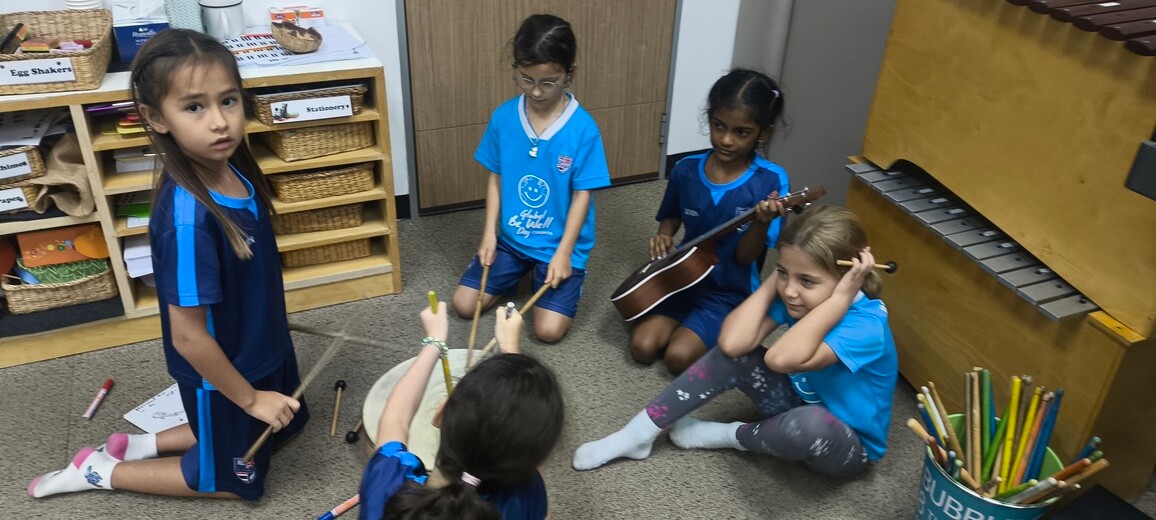
Young learners begin with simple echo songs, exploring their singing voices and moving to music with scarves or percussion instruments. At this stage, we focus on contrasts: high and low pitch, loud and soft sounds, fast and slow tempos. Children experiment freely, developing listening skills and an ear for melody. Activities include musical storytelling and imagination games, enabling children to bring scenes to life through sound, drawing and playing pictures using colour-coded instruments. Children sing call & response songs, echo songs, and nursery rhymes. Our focus is on building confidence and enjoyment through music and developing a life-long love for the subject.
Key Stage 1 (Ages 5 to 7), Year 1 and Year 2
As children grow, they begin to recognise rhythms using simple notation and learn about the treble clef. Through the glockenspiel and xylophone children learn to sing, play, and compose using Solfege notes. We introduce pentatonic scales and encourage small group singing and movement patterns. Enrichment comes through exploring songs from different cultures, reflecting the diverse community we serve in Bangkok. Students also start to explore basic instrumental techniques, as well as learn a production that they perform to the whole school.
Key Stage 2 (Ages 7 to 11); Year 3, 4, 5 and 6
By Key Stage 2, children deepen their practical skills considerably. They read basic musical scores, participate in beginner ensembles, and compose short melodies collaboratively. Discussions about form, dynamics, and texture become regular features of lessons. We frequently select pieces from around the world, embracing the cultural diversity of our Bangkok community. Students join musical ensembles such as band and choir, as well as take part in ensemble activities in class such as Indonesian Gamelan and Nang Yai. The Orff-Schulwerk approach is key in developing the link between the body and the ear, with children learning to collaborate and create alongside their peers in musical games and activities.
The Classroom Experience
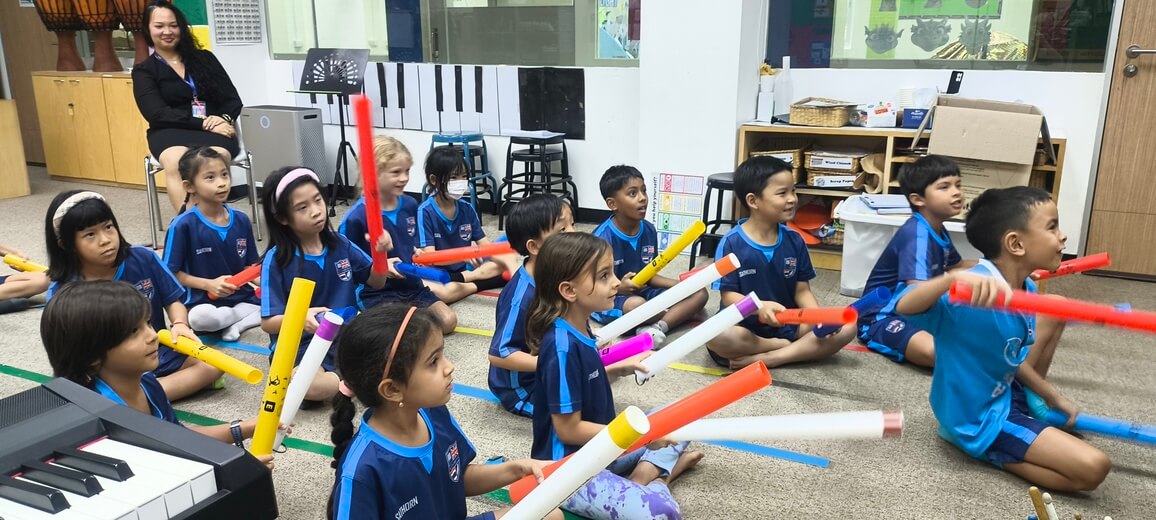
Music lessons take place in our dedicated Music Room on campus, providing purpose-built spaces for learning and creativity. A typical lesson at St. Andrews Sathorn is active and engaging, incorporating movement, sound, and collaborative participation. Rhythm games, call and response singing, and group improvisations form part of our regular approach, while instruments such as xylophones, hand drums, keyboards, and ukuleles remain readily accessible to students of all ages.
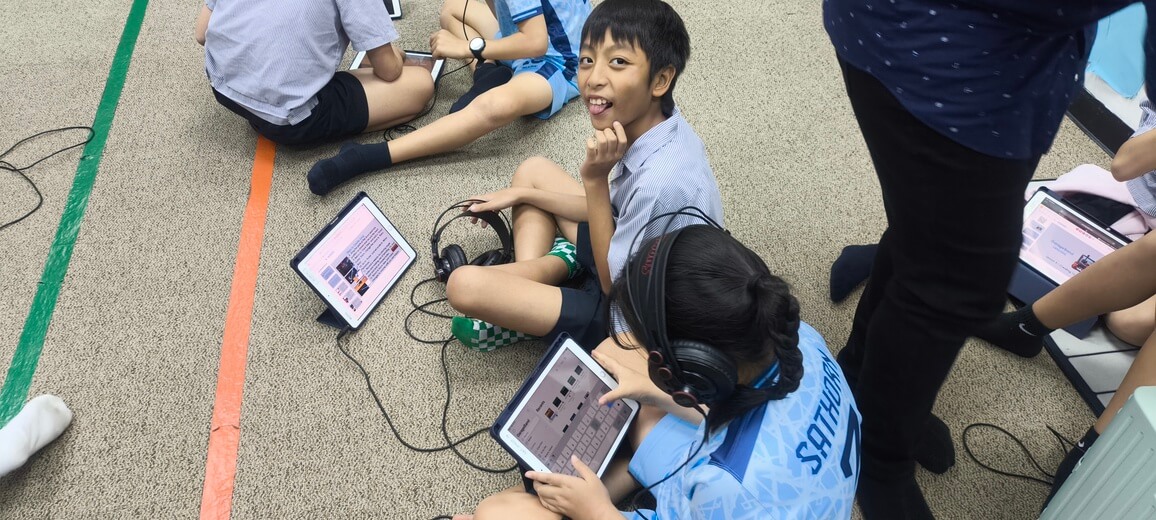
Movement and dance serve purposes beyond enjoyment. They help children develop body awareness and musical confidence. Clapping games and coordinated routines build coordination and teamwork. Teachers sometimes integrate technology, such as tablet-based rhythm applications or voice recorders, allowing students to capture and review their own music. This proves particularly valuable for self-reflection and recognising progress.
Music lessons also connect naturally with other areas of the curriculum. Storytelling, science, art, and social studies frequently inspire songs and performance projects. Through music, children explore history, geography, and the natural world in imaginative and lasting ways.
Choir Programme and Performance Opportunities
Many students discover a love for singing through our choir programme. Each age group has access to vocal groups, beginning with simple circle songs in the Early Years and progressing to larger choirs and part-singing for older children. Rehearsals are structured to remain focused and engaging, sustaining attention while building vocal stamina gradually.
Performance forms an integral part of our musical culture. Regular concerts take place both at school and in partner venues across Bangkok, providing students with a genuine sense of accomplishment and pride. We encourage families to attend as supportive audience members, volunteers, and companions when we take music into the wider community. The school coordinates ticketing, music folders, and transport to ensure these events remain accessible to all.
Off-Campus Performances
Taking music beyond the classroom is a valued aspect of each term. Our students regularly perform alongside other international schools, gaining new experiences through friendly collaboration. Sharing a stage with young musicians from different backgrounds cultivates cultural curiosity and mutual respect. At St. Andrews Sathorn we perform at multiple times throughout the year; Early Years perform a short musical show at Songkran, Y1 perform a Christmas Show, whilst Years 2 & 3 put on a secular Christmas Production. In the summer we have our major production of the year where Years 4, 5, and 6 all come together to star in a musical theatre show.
We also have performances at Christmas from Sathorn Choir, our school’s choral ensemble. Open to everyone without audition, Sathorn Choir is for Years 4, 5, and 6 students to gain experience and to learn to love the art of singing and performing. The choir does multiple performances throughout the year, including Christmas performances in and around Bangkok, visiting other schools for choral workshop days, and taking part in concerts in and around Bangkok.
For Years 1, 2, and 3, the school hosts Young Voices, our vibrant vocal ensemble that focuses on singing, rhythm activities, and fun games. Young Voices collaborates with Sathorn Choir for Christmas at The British Club, Bangkok, and we also perform in assemblies throughout the year. Many students who begin with Young Voices later join Sathorn Choir, continuing their musical journey with us.
Beyond this, the school participates in additional performances and shows through our TISAC partnership, an arts and sports collaboration with other Bangkok schools. Our school band competes in the Battle of the Bands, and we join a collaborative Primary Orchestra Day where children have the chance to perform major orchestral works as part of a classical ensemble, followed by an afternoon concert.
Safety and comfort remain our primary considerations for off-campus trips. Supervision ratios are maintained at appropriate levels, with trusted staff and parent chaperones present. Transport is arranged carefully, and parents receive detailed schedules to stay fully informed. Where possible, we incorporate time for informal music sharing and cultural exchanges, ensuring each trip offers both musical and social enrichment.
Instrumental and Vocal Opportunities
Every child can find a place to contribute, whether through singing, percussion, or melody instruments. We encourage all students to join beginner groups, such as the percussion ensemble or recorder club. Choirs and vocal ensembles offer opportunities to perform as a team, while small bands and ukulele groups provide scope for responsibility and emerging leadership.
After-school clubs or Extra-Curricular activities after regular school hours extend these opportunities further, supporting students who wish to dedicate additional time to practice and performance. We run groups such as Guitar Club, Band, Choir, Music Tech, and Traditional Thai Music (Khim). We ensure all groups have access to instruments, with clear guidance on care and respect for shared resources. Children with no prior experience are welcomed and supported as they learn.
Instrumental lessons, delivered by visiting specialist teachers, are available for piano, violin, voice, and guitar. While entirely optional, these lessons support students who wish to develop their skills beyond the core programme.
Assessing Musical Progress
Tracking progress in music differs somewhat from other subjects. We attend to improvements in pitch accuracy, rhythm, ensemble listening, and expressive singing. Milestones also include willingness to improvise, risk-taking, composing, and group collaborative work. Each child’s development is unique, yet milestones are recognised and celebrated at every stage. In the Early Years, progress might involve joining in with confidence or echoing a simple melody. In upper primary; Year 4, 5 and 6, it could mean leading a group in rehearsal or composing an original piece.
Reflection also plays an important role: students are given time to discuss, write, or illustrate what they found enjoyable or challenging. This practice supports self-awareness and continued growth.
Inclusion and Accessibility
We want every student to enjoy music, regardless of their starting point. Lessons are adapted to include visual cues, appropriate language support, and flexible roles for learners who require additional time or alternative approaches. Multilingual children are encouraged to share songs from home, helping everyone feel welcomed and valued.
No previous experience is required to participate in music at St. Andrews Sathorn. Success looks different for each child, and participation is the central objective. Students are consistently supported to try, rehearse, and improve at their own pace.
Children with additional needs receive individualised support where possible. Our classrooms are accessible, instruments are selected to accommodate a range of abilities, and alternative forms of participation, such as body percussion or sign-supported songs, are always available. Through flexibility and careful planning, every child has a way to take part.
Home and Community Engagement
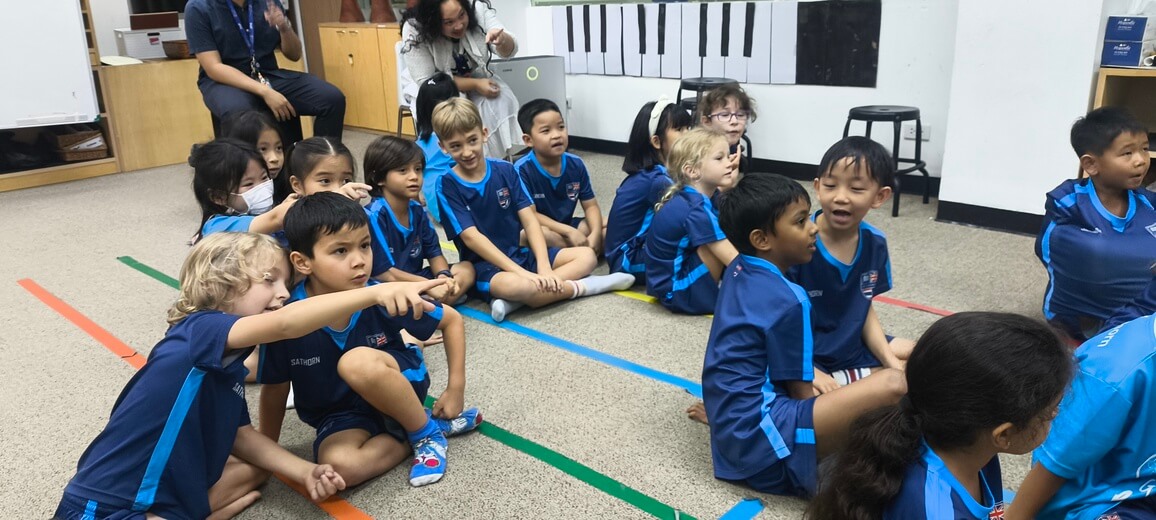
Families are a vital part of our musical community. We recommend short singing or rhythm activities at home, using everyday objects or favourite songs. Listening to a range of music together encourages conversation and deepens curiosity. When performance days approach, we remind parents that attendance and gentle encouragement contribute significantly to children feeling confident.
Bangkok offers a vibrant music scene, and we occasionally recommend local concerts or community festivals for families seeking musical experiences beyond school. We are pleased to provide guidance on upcoming events or family-friendly activities in the city. Festivals and workshops expose children to new genres and local talent, extending musical learning into the broader community.
We also encourage families to share music from their own cultures with the class. This helps children take pride in their heritage while enabling classmates to connect with different traditions, broadening young perspectives on the wider world.
Health, Well-being, and Safety
Music supports the whole child. We observe how singing and group music making can enhance mood and focus while reducing stress, even during demanding weeks.
Voice care is essential, so we teach safe singing practices, including warm-ups and gentle breathing techniques appropriate for all ages. We celebrate every child’s readiness: no one is required to perform solo until they feel prepared. Music lessons are crafted to foster enjoyment, not pressure. A supportive atmosphere in rehearsals and concerts helps students manage nerves and develop resilience. We celebrate performance as a process rather than a competition.
Teachers collaborate to address sensory needs, making reasonable adjustments for volume or lighting when required. Our aim is to ensure every child feels comfortable and secure, whether playing, listening, or observing.
Frequently Asked Questions
How do I sign my child up for choirs or after-school music clubs?
We provide sign-up information at the start of each term, with details included in school newsletters and on the school music portal. For families joining mid-term or new to the school, we are pleased to help place students in a group suited to their interests and schedule.
What should children wear for performances?
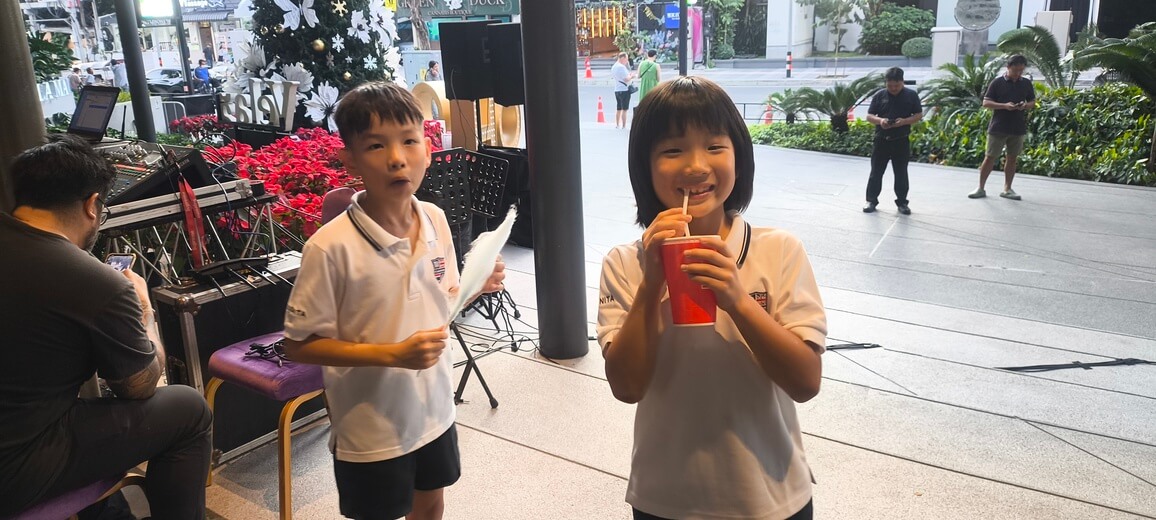
For choir performances children wear a St. Andrews Sathorn Choir Polo Shirt paired with school uniform shorts or skorts. For other performances attire is typically school uniform, occasionally with small additional items such as ribbons or festive caps provided by the school. For band competitions such as Battle of the Bands, specific costumes or colours may be requested in advance. Our Sathorn families receive ample notice and support to ensure children feel comfortable.
How do performance schedules and family RSVPs work?
Events are announced in advance with complete details regarding time, location, and transport. Families RSVP through an online form or by contacting the school office. We encourage communication regarding any scheduling conflicts so every child can participate in a way that suits their family.
Join Us
We warmly invite parents, carers, and friends to attend upcoming concerts and classroom showcases at St. Andrews International School Sathorn. Your presence is invaluable for students developing confidence as performers and musicians. We welcome feedback and suggestions for future musical directions. Together, we can continue to make musical learning rewarding for our children.